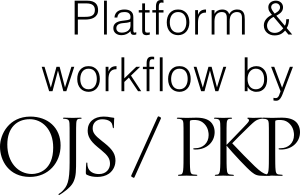
Polisemi Kata al-Ḥisāb dalam Al-Qur’an: Kajian Semantik Kontekstual
DOI:
https://doi.org/10.60040/jak.v4i2.291Keywords:
al-ḥisāb, bahasa Arab Al-Qur’an, polisemi leksikal, semantik kontekstual, wujūh wa-naẓāʾirAbstract
A Qur’anic lexical item cannot be interpreted adequately through a single dictionary equivalent when its morphological and syntactic environments vary. This study examines the contextual meanings associated with al-ḥisāb and derivatives of the Arabic root ḥ-s-b in Qur’anic discourse. Using qualitative descriptive research, library-based document analysis, and manual semantic-content interpretation, the study compares selected Qur’anic expressions with Arabic lexicons, exegetical sources, and contemporary lexical-semantic scholarship. The author’s original classification reports 81 distinct verses and 86 semantic assignments distributed across nine contextual categories: supposition, counting/reckoning, recompense, punishment, the Day of Reckoning, absence of numerical limit, accountability, sufficiency, and presentation of the account. The largest category is supposition (46 assignments), predominantly realized in verbal constructions; nominal expressions more frequently develop evaluative and eschatological interpretations. Close readings of ḥasib(a), yawm al-ḥisāb, bi-ghayri ḥisāb, and ḥisāban yasīran show that morphological category, collocation, negation, and exegetical context jointly direct interpretation. Rather than treating the nine categories as unrelated homonyms, the article interprets them as a structured field of lexical and contextual meanings surrounding estimation, reckoning, and evaluation. Nevertheless, the reported numerical inventory should not be equated with all Qur’anic occurrences of the root until a full verse-level concordance is supplied. The article contributes a framework that connects traditional wujūh wa-naẓāʾir with contemporary polysemy analysis and identifies implications for Qur’anic exegesis and translation.
References
Abdel Haleem, M. A. S. (1992). Grammatical shift for rhetorical purposes: Iltifāt and related features in the Qur’ān. Bulletin of the School of Oriental and African Studies, 55(3), 407–432. https://doi.org/10.1017/S0041977X00003621
Ahmed, H. A. (2026). Verses of reckoning in the Holy Qur’an: A linguistic and textual study. Journal of Babylon Center for Humanities Studies, 16(10). https://doi.org/10.66026/tvpbf644
Alharbi, M. M. (2018). On Quranic lexical semantics. QURANICA: International Journal of Quranic Research, 10(2), 15–36. https://doi.org/10.22452/quranica.vol10no2.2
Ali, E. A. M. (2020). Lexico-semantic issues on translating homonymy and polysemy: A comparative study based on the Noble Qur’an. QURANICA: International Journal of Quranic Research, 12(1), 45–68. https://doi.org/10.22452/quranica.vol12no1.3
Almjlad, S. S. A. (2025). Semantic untranslatability in Quranic discourse: Challenges and contextual remedies in English translation. Cogent Arts & Humanities, 12(1), Article 2542336. https://doi.org/10.1080/23311983.2025.2542336
al-Qurṭubī, M. ibn A. (2006). Al-Jāmiʿ li-aḥkām al-Qurʾān. Muʾassasat al-Risālah.
al-Rāghib al-Aṣfahānī. (2009). Al-Mufradāt fī gharīb al-Qurʾān. Dār al-Qalam.
al-Suyūṭī, J. al-D. (1974). Al-Itqān fī ʿulūm al-Qurʾān. Al-Hayʾah al-Miṣriyyah al-ʿĀmmah li-l-Kitāb.
al-Ṭabarī, M. ibn J. (2001). Jāmiʿ al-bayān ʿan taʾwīl āy al-Qurʾān. Dār Hajar.
al-Zarkashī, B. al-D. (1957). Al-Burhān fī ʿulūm al-Qurʾān. Dār Iḥyāʾ al-Kutub al-ʿArabiyyah.
Atabik, A. (2021). Al-Naẓm stylistic discourse in iʿjāz al-Qurʾān based on al-Jurjānī’s perspective: Analysis of Arabic literary criticism on Qur’an studies. Ulumuna, 25(1), 57–83. https://doi.org/10.20414/ujis.v25i1.425
Bowen, G. A. (2009). Document analysis as a qualitative research method. Qualitative Research Journal, 9(2), 27–40. https://doi.org/10.3316/QRJ0902027
Carston, R. (2021). Polysemy: Pragmatics and sense conventions. Mind & Language, 36(1), 108–133. https://doi.org/10.1111/mila.12329
Dukes, K., Atwell, E., & Habash, N. (2013). Supervised collaboration for syntactic annotation of Quranic Arabic. Language Resources and Evaluation, 47(1), 33–62. https://doi.org/10.1007/s10579-011-9167-7
Grefenstette, G., & Hanks, P. (2023). Competing views of word meaning: Word embeddings and word senses. International Journal of Lexicography, 36(2), 211–219. https://doi.org/10.1093/ijl/ecad005
Hamdani, W. H. (2019). The patterns of Arabic morphological polysemy and their equivalence in Indonesian language. In Proceedings of ICOLLITE 2018 (pp. 395–398). Atlantis Press. https://doi.org/10.2991/icollite-18.2019.87
Hsieh, H.-F., & Shannon, S. E. (2005). Three approaches to qualitative content analysis. Qualitative Health Research, 15(9), 1277–1288. https://doi.org/10.1177/1049732305276687
Ibn Kathīr, I. ibn ʿU. (1999). Tafsīr al-Qurʾān al-ʿaẓīm. Dār Ṭayyibah.
Ibn Manẓūr. (2007). Lisān al-ʿArab. Dār Ṣādir.
Izutsu, T. (2002). Ethico-religious concepts in the Qurʾān. McGill-Queen’s University Press.
Kilgarriff, A. (1997). I don’t believe in word senses. Computers and the Humanities, 31(2), 91–113. https://doi.org/10.1023/A:1000583911091
Krippendorff, K. (2004). Reliability in content analysis: Some common misconceptions and recommendations. Human Communication Research, 30(3), 411–433. https://doi.org/10.1111/j.1468-2958.2004.tb00738.x
Li, J., & Joanisse, M. F. (2021). Word senses as clusters of meaning modulations: A computational model of polysemy. Cognitive Science, 45(4), Article e12955. https://doi.org/10.1111/cogs.12955
Lombard, M., Snyder-Duch, J., & Bracken, C. C. (2002). Content analysis in mass communication: Assessment and reporting of intercoder reliability. Human Communication Research, 28(4), 587–604. https://doi.org/10.1111/j.1468-2958.2002.tb00826.x
McCarthy, D. (2009). Word sense disambiguation: An overview. Language and Linguistics Compass, 3(2), 537–558. https://doi.org/10.1111/j.1749-818X.2009.00131.x
Mohamed, D. E. (2019). Ambiguity and vagueness in the Qurʾān: A semantic investigation into significant examples. QURANICA: International Journal of Quranic Research, 11(2), 38–52. https://doi.org/10.22452/quranica.vol11no2.3
Navigli, R. (2009). Word sense disambiguation: A survey. ACM Computing Surveys, 41(2), Article 10. https://doi.org/10.1145/1459352.1459355
Pamungkas, M. I., Kurniawan, E., & Supriadi, R. (2026). Beyond orthographic variation: A corpus-based semantic study of رحمة and رحمت in Al-Qur’an. Ta’lim Al-’Arabiyyah, 10(1), 129–149. https://doi.org/10.15575/jta.v10i1.44977
Quranic Arabic Corpus. (t.t.). Quran dictionary: Root ح س ب. University of Leeds. https://corpus.quran.com/qurandictionary.jsp?q=Hsb
Sawalha, M., Al-Shargi, F., Yagi, S., AlShdaifat, A. T., Hammo, B., Belajeed, M., & Al-Ogaili, L. R. (2025). Morphologically-analyzed and syntactically-annotated Quran dataset. Data in Brief, 58, Article 111211. https://doi.org/10.1016/j.dib.2024.111211
Ṣaḥīḥ al-Bukhārī. (t.t.). Kitāb al-tafsīr, hadis no. 4939 (tentang al-ḥisāb al-yasīr). https://sunnah.com/bukhari:4939
Downloads
Published
How to Cite
Issue
Section
License

This work is licensed under a Creative Commons Attribution-ShareAlike 4.0 International License.